Book covers and reviewer comments
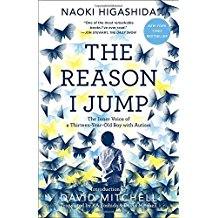
The author of this book, Naoki Higashida, is a boy who struggles significantly with verbal communication. He prefers to type his thoughts onto a computer, which he finds to be very useful for helping others understand him.
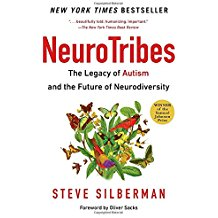
Winner of the 2015 Samuel Johnson Prize for non-fiction.
– A groundbreaking book that upends conventional thinking about autism and suggests a broader model for acceptance, understanding, and full participation in society for people who think differently.
-Sparklingly humane book makes the case that there is no such things as neurologically ‘normal’.
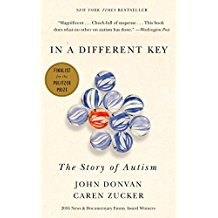
Journalists Donvan and Zucker’s tremendous study keeps autism at its center while telling an extraordinary tale of social change. The authors follow evolving cultural responses to autism and autism spectrum disorders, including intolerance, a desperate quest for successful treatments, and the currently high level of awareness — which doesn’t always prevent misunderstanding.
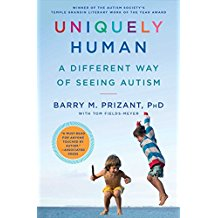
Instead of classifying “autistic” behaviors as signs of pathology, Dr. Prizant sees them as part of a range of strategies to cope with a world that feels chaotic and overwhelming. Rather than curb these behaviors, it’s better to enhance abilities, build on strengths, and offer supports that will lead to more desirable behavior and a better quality of life.

A new book giving a voice to mothers and fathers captures the continuing journey of unconditional love, utmost devotion and hope. The telling is honest and brave. The book consists of stories of nine families coping with autism, most of them active leaders in the autism community. Every story is unique as the parents recount the impact of finding out their child’s condition. (Review by Olive Tripon, Philippine Daily Inquirer, Feb 25, 2017).
This book’s editor is Dr. Lirio Covey, Ph.D., AAAP President. Co-parents from the Manila autism community contributed to this anthology of narratives on living and raising children with autism: Erick Villacorte, Jennifer Cuaycong, Mel Sabino, Evert Malapad, Josephine Palomares, Grant Javier, Sol and Dennis Bautista, Christine Siruelo.
For hard copy and information on price + postage, email adultautismphil, with your address and the book will be sent by LBC. Also available as an e-book on amazon.com and barnes & nobles.com.

 The Association for Adults with Autism, Philippines is a non-profit association, established by parents of individuals within the Autism Spectrum Disorder (ASD) and professionals dedicated to the welfare of those with this developmental disorder.
 AAAP Today