
Archive by Author

SOCIAL CAMOUFLAGE IN AUTISM

25 Feb

CAMOUFLAGING: A COSTLY SOCIAL STRATEGY FOR COPING WITH AUTISM

by Lirio S. Covey

About three to four times more males than females receive the diagnosis of autism spectrum disorder (ASD). Why that is so has been unclear. What has been frequently noted is that girls receive an ASD diagnosis later in life, often in adulthood, instead of the common detection time of ASD during the years up to 8 years of age.

A behavioral phenomenon labelled as “social camouflaging” is becoming understood as explaining in part the larger autism ratio of boys to girls. It is a social strategy engaged in more typically by females than males with autism, enabling the latter to seem to fit better in their social environments at school or at work. It can also be referred to as a dissonance between what’s going on emotionally in the inside and what appears on the outside.

Social camouflaging occurs when the person recognizes her/himself to be engaging in behaviors considered unusual or unacceptable, and responds to this awareness by forcing him/herself to stop doing those behaviors, making adjustments to refrain from such acting out telling autistic behaviors. Like the comforting behaviors of stimming, fidgeting, or other repetitive behaviors, which are among the hallmarks of autism.

This inhibition of natural inclinations, which requires self-awareness and great effort can be physically and mentally exhausting. The frequent psychological costs are – not feeling understood by others and by their own selves, anxiety, and depression.

Contributing to the problem of a possible under-rating of ASD in females is that existing instruments for diagnosing autism are oriented towards identifying autistic traits usually found among males. Many autistic traits among females have yet to be well identified and understood. This under-diagnosis partly explains why diagnosis later in life occurs more frequently in girls, leading to less and later access to relevant social supports and other therapeutic aides.

Social camouflaging and the costs of autism are discussed further in the linked article and in the peer-reviewed article referenced below.

https://www.spectrumnews.org/features/deep-dive/costs-camouflaging-autism/amp

Hull L, Petrides, KV, Allison C, Smith P, et al. “Putting on My Best Normal Social Camouflaging in Adults with Autism Spectrum Conditions, Journal of Autism and Developmental Disorders, August 2017, Volume 47, Issue 8, pp 2519–2534.

FACIAL EXPRESSIONS IN PERSONS WITH AUTISM

13 Jan

HOW FACIALLY EXPRESSIVE ARE PERSONS WITH AUTISM?

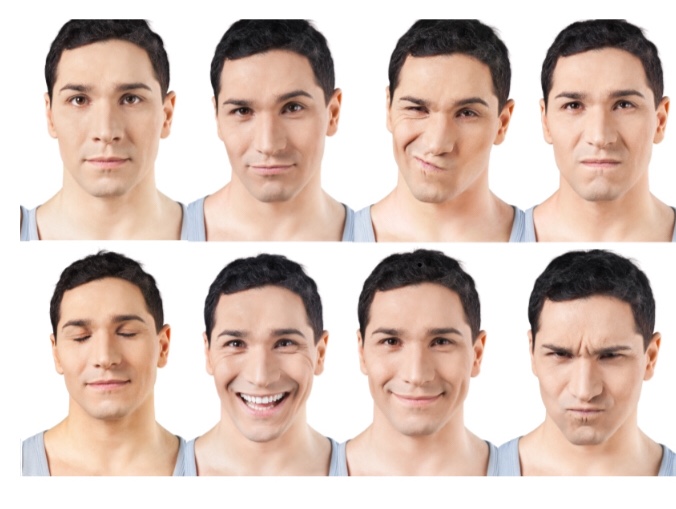
A recent analysis of 39 well conducted research studies found that persons with autism spectirum disorder (ASD) are less expressive overall than persons without ASD. Facial expression is an important means of communication. Being able to accurately express inner emotions is critical in conducting meaningful social interactions.

In addition, their facial expressions were found to be less consistent or appropriate to the social context. This characteristic, the authors of the study suggest, likely contributes to the deficits of persons with autism in effecting reciprocal social interactions.

Difficulty in social interaction and communication is one of the two core symptoms of Autism Spectrum Disorder (Repetitive, compulsive behaviors and resistance to change is the other).

Variations in the extent and degree of this deficit were noted in the research. Differences when compared with non-ASD persons were smaller with older age and higher intellectual functioning. This suggests that more knowledge and familiarity with social practices and norms could improve the lack of appropriate and meaningful facial expression when ASD is present. Such familiarity could come with greater socialization and experiences in variable and wider social settings.

Comment: This would imply that greater socialization and experiences with persons without ASD, in the general community, an important outcome in inclusion practices in employment, recreational, and educational settings, could ameliorate, over time, the lack of social competencies notable in persons with Autism Spectrum Disorder.

Reference: Facial Expression Production in Autism: a Meta-analysis. Dominica A. Trevisan, Maureen Hoskyn, Elina Birmingham. Autism Research, December, 2018


AAAP CHAMPION 2018 AWARD

17 Nov

ATTY. SEDFREY M. CANDELARIA

Movements need champions, without whom progress would be slow or not happening.

With the audacity to regard our organization as a force in a movement – that of drawing attention and societal resources to adults with autism, a hitherto ignored segment of the autism population, AAAP has awarded the first AAAP Champion award.

AAAP is fortunate and honored to have been exposed to a true Champion of the AAAP cause.

The first recipient of the AAAP CHAMPION AWARD is Atty Sedfrey M. Candelaria.

– He is a Master of Laws graduate of the University of British Columbia, Vancouver, Canada.

– He was the very successful Dean of the Ateneo de Manila University School of Law from 2010 to 2018.

– He now heads the Research Publications and Linkages Office of the Philippine Judicial Academy and Chairs its Department of Special Areas of Concern.

– His generosity towards AAAP fits a lifetime of service to persons in need. His writings, many written for UNICEF, have focused on human rights, refugees, children’s rights, and rights of indigenous peoples.

Atty Candelaria, AAAP is deeply grateful for your facilitating our organization’s access to the exceptional elegant and world-class level of facilities at the Ateneo Professional Schools at Rockwell Center, starting back when AAAP was a fledgling organization. We launched in February 2012. We held our first symposium at the Ateneo Law School only a few months later, in November, 2012.

For five consecutive years – from 2012 to 2016, AAAP held symposia delivered by experts on autism and related topics at Ateneo in Rockwell. These events were attended by significant leaders and members of the autism and other “special needs” community, from the government as well as private organizations.

This series of educational lectures was a significant boost to AAAP’s recognition as a resource by members of the community of families and persons with autism and their advocates. This comprised invaluable help towards our mission of improving the lives of hitherto much ignored adults with autism in the Philippines.

Atty. Candelaria, you are indeed an AAAP CHAMPION!

Congratulations and, as members of the Filipino community, my fellow AAAP members and I thank you and wish you continued success in all your future endeavors.