Archive by Author

Autism Prevalence Rises to 1 in 88

30 Mar

The following remarks were delivered by Mark Roithmayr, president of Autism Speaks, at the Centers for Disease Control in Atlanta on March 29, 2011. You can follow him on Twitter @markroithmayr.

Merriam-Webster defines the word epidemic as “Excessively prevalent. Affecting a disproportionately large number of individuals within a population, community or region at the same time.”

With the new Centers for Disease Control and Prevention numbers now showing that 1 in 88 children in the United States are being diagnosed with autism – nearly a doubling of the prevalence since the CDC began tracking these numbers – autism can now officially be declared an epidemic in the United States.

We are dealing with a national emergency that is in need of a national strategy. At 1 in 88, we now have over 1 million children directly affected by autism. According to a newly released study the annual cost of autism in the United States is a staggering $126 billion annually, more than tripling the cost analysis from six years ago.

Behind all these statistics are real families, real individuals struggling each and every day. Some with autism are struggling to find satisfying jobs where they can productively use their talents and abilities. Others with autism have extremely complicated medical and social challenges. Make no mistake though, wherever one falls on the spectrum, all with autism struggle each and every day. And it is clearly time we, as a caring society, commit to a National Strategy. A comprehensive National Strategy that substantially increases all efforts to date. A call to action that:

  • Funds more basic science uncovering the genetic underpinnings of autism.
  • Funds more environmental research detecting the causes of autism.
  • Accelerates the funding and development of effective medicines and treatments.
  • Commits to a strategy where all children with autism from every background are diagnosed no later than 18 months of age.
  • Commits to a National Training Corps recruiting more therapists and service providers as well as specially trained teachers and teacher assistants into the field.
  • We also need to address the growing issue of adults with autism specifically around continuing education, employment, housing/residential living and community integration. Here too, we need a focus on a National Training Corps to recruit and train professionals to work with our adults.

As the nation’s leading science and advocacy organization, Autism Speaks today calls on the entire nation to commit to this National Strategy, a true public-private partnership:

  • From President Obama to each of the Republican candidates for President to all Members of Congress.

We desperately need further commitments from….

  • The CDC and Dr. Frieden whose very funding of this prevalence study is in jeopardy of being cut going forward.
  • Secretary Sebelius and the Department of Health and Human Services.
  • Dr. Francis Collins and the National Institutes of Health.

And it is not the federal government alone we call on. We need the private sector as well as state and local governments to be part of this National Strategy:

  • Right now insurance companies and the majority of self-funded plans under ERISA discriminate against families with autism denying reimbursement for the basic, evidenced based services that can often dramatically improve the quality of life for their children with autism.
  • There are pharmaceutical companies who can speed the process of effective medicines for people living with autism to improve communication, socialization and behavior, the core symptoms of autism.
  • We need companies across all industries to commit to hiring the 74% of adults with autism who believe they have the potential to be employed if just given the opportunity.
  • And we need employers of all parents who have children with autism to become much, more family friendly as way too many mothers of children with autism have had to stop out of their careers to be able to care for their loved ones because their work environments could not find a way to accommodate their schedules.
  • We need local school systems to deliver individualized and quality driven plans to meet autism’s ever growing demand for appropriate special education services.
  • We need faith based and community based organizations who can provide respite services for parents and caregivers as well as recreational and community integration opportunities for people with autism.
  • And the list goes on to include siblings, grandparents, aunts, uncles, friends and neighbors. At 1 in 88, we are now hard pressed as a nation to find anyone who is not touched by autism.

Ultimately the question we need to ask ourselves is why over the last two decades has there been such a tremendous increase in autism? Dr. Peter Bearman of Columbia University was funded by the NIH to answer this very question. His findings have revealed that the increase in prevalence is only partly explained by a broadening of the diagnosis, improved detection, and more awareness. A large portion of the increase some 50% remains unexplained. That is why we must aggressively fund research, including the critical study of potential environmental factors. We need to find the answers.

At 1 in 88, let me be clear, the United States is experiencing an autism epidemic.

This is a national emergency. We need a national strategy.

For more on the new autism prevalence numbers released by the CDC, visit our prevalence page.

Sincerely,
Mark Roithmayr
President, Autism Speaks

Autism Speaks contact information:
Email Address: editors
Autism Speaks Logo.jpg

AAAP Raise Funds for 1st Residential Community for Adults with Autism in the Philippines

23 Mar

AAAP Raise Funds for 1st Residential Community for Adults with Autism in the Philippines

Residential communities and villages for adults with autism are established in various countries around the world, such as the United States, Canada, the United Kingdom, Germany, South Africa, Botswana, India and South Korea, primarily due to concerns of parents on the continuing care of their children as they age. Examples are the Camphill Communities, Homes Caring for Autism, The National Autistic Society residential services, and Heartspring.

In the local context, the Association for Adults with Autism Philippines (AAAP), a non-stock, non-profit association composed of parents, educators, and other advocates for persons with autism, is undertaking the construction of the first residential community for adults with autism in the country, called “A Special Place”.

AAAP President Lirio Covey, whose son, Mikey, has been living for 10 years in a group home in Westchester, New York, explains, “Group home residence for persons with autism is a not a novel concept. These programs have thrived throughout the world, in Europe and in the US, even in places in the Middle East and Asia. Group residences for adults with autism have been shown to benefit its residents. Their family members benefit, too. In many ways, the larger society benefits as well.”

The organization considered various models in choosing the right home group that will fit in Philippine society and culture. “In the US, the predominant model is the single group home run by private individuals or an umbrella agency. Residents of these homes are brought to their various day activities by vehicle transport. With the scarcity of appropriate facilities in most areas in the Philippines, including Manila, and the notorious traffic situation, we didn’t think that model would work here,” continues Covey.

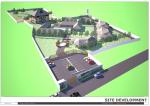
In a fundraising event launching “A Special Place”, Covey presented that AAAP opted for the farmstead model, which is the most popular type in Europe and also exists in the US. “This model, necessarily located in a large area, comprises several individual homes all located within the same campus or setting. In each home, residents have their own bedrooms, their own baths; they share a kitchen, a dining room and a living room. Within the farmstead are areas for productive work, exercise, socialization, and recreation. For the Philippine setting, we think the farmstead model would work best.”

A model that integrates residential and vocational training program for autistic adults was developed by Sybil Elgar in the United Kingdom in 1976.

After considering several possible sites for this residential community, the group has identified a 1- to 2-hectare property outside of Lipa City. Officers of AAAP pool their personal funds to purchase the lot where “A Special Place” will soon rise.

“Our small group of pioneer parents and founding friends will contribute towards a seed fund, but we know that our pooled contributions will be far from adequate to cover the initial and on-going outlays. To that end, we are mounting a Capital Campaign to ensure the viability of our timetable and fundraising plan,” says Covey. Being a first in the country, AAAP foresees the project as a milestone where various companies, organizations, and individuals can help achieve.

Covey closed her presentation with an appeal, “We ask you and the larger Filipino public to take pride in helping us build ‘A Special Place’. Help us generously, with your heart. Lead us and speak about us to others who can help. Together, we will make history. We will change people’s lives.”

# # #

The Association for Adults with Autism, Philippines (AAAP) is a non-profit group conceived and established by parents of persons with autism. The association aims to provide sustained enrichment opportunities and long-term care to these individuals as well as offer means to achieve personal growth, social interaction, and a cooperative life among their peers. Visit https://adultautismphil.wordpress.com for more details.

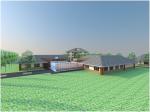
Figures A to D are the drawings and perspectives of “A Special Place” by architecture student Carlos Cham, whose younger brother, Vico, is an autistic adult. Their parents, Jun and Cathy Cham, are architects and are active members of AAAP.

A Special Place for Adults with Autism Launched

16 Mar

A Special Place for Adults with Autism Launched

“As a parent, you will do everything you can to make your child independent,” broadcast journalist Karen Davila shared during the launch of A Special Place, a project of the Association for Adults with Autism Philippines (AAAP) at the Filipinas Heritage Library.

Davila, who gave the opening remarks during the launch, talked about her son, David, diagnosed at the age of three to have Pervasive Developmental Disorder – Not Otherwise Specified (PDD-NOS), or having some behaviors seen in autism but not necessarily having Autistic Disorder. David, now 10 years old, celebrated his birthday on the same day of the launch.

“When you have a child with autism, parenting becomes a whole new ballgame,” Davila added, to which many parents of persons with autism agreed. Davila learned of AAAP’s initiative to build A Special Place, a residential community for individuals with autism through the organization’s president, Dr. Lirio Sobrevinas Covey, when they have been exchanging mails about the project while Covey was still in the US.

Dr. Covey is a psychologist and professor of Clinical Psychology and a Research Scientist at the Columbia University Medical Center in New York. She is also parent to 33 year-old Mikey, who is living in a group home in Westchester, New York for 10 years.

“Before AAAP, we were strangers to one another. We came together in AAAP, have become caring friends, bonded by a common cause – you might say – fear. What will happen to our charges when their parents and caregivers are no longer here? Our goal is to build a nurturing environment where these adults with autism can grow – safely, productively, with their peers, and independently of their original families,” says Dr. Covey.

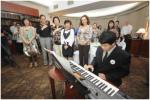
AAAP Vice President Catherine Cham was a proud parent during the launch as his son Vico, 20 years old, sketched on-the-spot individuals who graced the event, including Davila, while Macky Palomares played the piano. Vico’s older brother, Carlos, a graduating architect student, presented his perspectives of A Special Place and its amenities as part of the program. “This is a labor of love,” remarks Carlos Cham.

The organization has identified a 1-2 hectare property outside of Lipa City. “The site fulfils the basic criteria that we had planned for a cool environment, not necessitating air conditioning, not flood-prone, and close to a metropolitan area which would have facilities for medical care, training centers for staff and residents who can work outside of the group home premises,” according to Dr. Covey.

A Special Place will consist of six individual houses, one building for staff and visitors’ quarters, and another building for administration, the library, and medical facilities. Residents will be adults who receive the diagnosis of autism, as certified by a clinical team composed of a neurologist, a psychiatrist, and a psychologist.

For more information on A Special Place and AAAP, contact Carissa Villacorta at +639175955480 or send an email to adultautismphil.

# # #

The Association for Adults with Autism, Philippines (AAAP) is a non-profit group conceived and established by parents of persons with autism. The association aims to provide sustained enrichment opportunities and long-term care to these individuals as well as offer means to achieve personal growth, social interaction, and a cooperative life among their peers. Visit https://adultautismphil.wordpress.com for more details.

Figure A : Award-winning broadcast journalist Karen Davila shared about her experience as a parent of a child with autism.

Figure B : Macky Palomares played the national anthem while guests look on.

Figure C : Actress and beauty queen Gloria Diaz showed her support at the launch. With her in photo is Ray Altarejos.

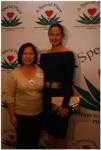
Figure D : AAAP Vice President Cathy Cham with guest Tweetie de Leon.

Figure E : AAAP President Lirio Covey presented the concept of A Special Place.