Archive | June, 2017

Explaining autistic persons’ reluctance to engage in direct eye contact

26 Jun

Why do persons with autism have difficulty engaging in eye contact?

by Lirio Sobrevinas-Covey, Ph.D.

Limited engagement in eye contact is commonly seen among persons with autism. It is widely considered to demonstrate the individuals’ lack of social interest and indifference – a core criterion of autism spectrum disorder.

A study from the Athinoula A Martinos Center for Biomedical Imaging in Massachusetts suggests the cause is neurological based behavior rather than an indication of social indifference.

Using functional magnetic resonance imaging (fMRI) techniques to compare responses of persons with autism versus non-autistic controls to faces conveying emotions, the researchers found an uncomfortable and stressful over-stimulation experienced by the autistic persons, but not the controls, when asked to gaze at the eye –region. This differential reaction did not occur in the free-viewing condition – when gaze is not focused on the eye-region.

The authors state that – “our results show that this behavior is a way to decrease an unpleasant excessive arousal stemming from over-activation in a particular part of the brain.”

Says Nouchine Hadjikhani, an associate professor of Radiology at Medical School and the lead researcher – “forcing children with autism to look into someone’s eyes in behavioral therapy may create a lot of anxiety for them. An approach involving slow habituation to eye contact may help them overcome this overreaction and be able to handle eye contact in the long run, thereby avoiding the cascading effects that this eye-avoidance has on the development of the social brain.”

Reference: “Look me in the eyes: constraining gaze in the eye-region provokes abnormally high subcortical activation in autism”, Nouchine Hadjikhani, Jakob Åsberg Johnels, Nicole R. Zürcher, Amandine Lassalle, Quentin Guillon, Loyse Hippolyte, Eva Billstedt, Noreen Ward, Eric Lemonnier & Christopher Gillberg, Scientific Reports, doi: 10.1038/s41598-017-03378-5, published online 9 June 2017.

ADEQUATE SLEEP VERSUS SLEEP APNEA IN KIDS WITH AUTISM

10 Jun

Does your child with autism have difficulties with sleep?

by Lirio Sobrevinas-Covey, Ph.D.

Sleep apnea is a disorder characterized by shallow breathing and frequent breathing pauses during sleep. Breathing pauses can occur 30 or more times an hour, and normal breathing can start again, sometimes with a loud sound. The quality of sleep is poor, and the person will feel tired and sleepy during the day.

Sleep apnea is known to occur more frequently, up to about 50% of children with autism spectrum disorder (ASD).

It has been reported that sleep difficulties may be a cause of behavioral problems in children. Overall, children need good quality sleep for the proper development of the brain.

A common treatment for sleep apnea is adenotonsillectomy (AT) which involves the removal of the adenoids and tonsils. It is one of the most common surgical procedures performed on children. AT is usually performed on an outpatient basis. The patient goes home from the hospital the same day as his or her surgery, although overnight hospital admission is sometimes done in special circumstances such as when there is a co-occurring medical condition.

Evidence of improved attention and behaviors after AT for sleep apnea led a group of pediatric researchers in Japan to evaluate the effect of AT in children with ASD.

Measures of several behavioral indices taken at two time points, six months apart, were taken from two groups of children with autism. The study group was comprised of 30 children with autism and sleep apnea ; the comparison group comprised 24 children with autism without sleep apnea (regarded as the control group representing the natural course of the target behaviors).

Assessments using the Children’s Behavioral Checklist were made contemporaneously for the treated group and the control group before the AT treatment and six months later. The researchers found no changes over the two time points in the control group of children with autism and no sleep apnea. By contrast, in the children with autism and sleep apnea who were treated with AT, thought problems, social problems, attention problems, and aggressive behaviors were significantly decreased, suggesting an important beneficial effect of AT.

Why sleep problems occur more often in children with ASD is unclear. Some hypotheses include malfunction in the body’s 24-hour biological clock (the circadian rhythm), effects of medications taken for autism symptoms, and dysregulation of the hormone melatonin which is involved in the sleep cycle. Also hypothesized is a shared neurobiological etiology of sleep apnea and autism.

The study results suggest an important role of adequate sleep quality in the mental development of children with ASD and, relatedly, attention to and treatment of sleep difficulties in the clinical care of children with autism.

It bears noting as well that, whereas AT is the first-line choice for pediatric sleep apnea, as with any surgical intervention, it also carries some risks.

Citation: Kids With Autism Who Have Adenotonsillectomy for OSA Show Behavioral Improvement – Medscape – Jun 06, 2017.

Reference: Murata E, Mohri I, Kato-Nishimura et al, Evaluation of behavioral change after adenotonsillectomy for obstructive sleep apnea in children with autism spectrum disorder, Research in Developmental Disabilities, 65, 127-139, June 2017.

VIDEO GAMES – NOT AS BAD AS WE THOUGHT.

8 Jun

Active video games can help children with autism.

Deficits in motor skills deficits are a key characteristic of many developmental disorders, including intellectual disabilities, Autism Spectrum Disorder, Down syndrome and Cerebral Palsy.

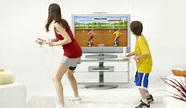
A review of 19 studies on children’s and adolescents’ use of active video games, like Nintendo WII, found that these interactive games can help non-typically developing children improve critical motor skills.

In addition, these children improved their perception of their own motor competence and physical abilities after playing these games.

“These games involve moving the body during play and often mirror the naturalistic settings of the particular activity or sport, helping kids to master a particular skill in a low-pressure environment.”

Reference: Do Active Video Games Benefit the Motor Skill Development of Non-Typically Developing Children and Adolescents: A Systematic Review, Zoey E. Page, Stephanie Barrington, Jacqui Edwards, Lisa M Barnett, Journal of Science and Medicine in Sport, doi: 10.1016/j.jsams.2017.05.001, published online 18 May 2017.